
Nur für die Forschung bestimmt
TIC10 (ONC201) Akt Inhibitor
Kat.-Nr.: S7963
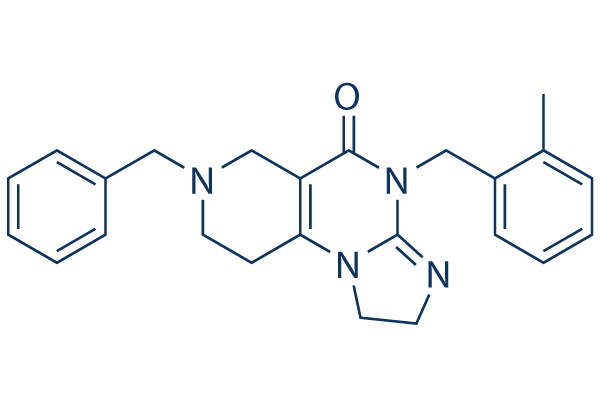
Chemische Struktur
Molekulargewicht: 386.49
Qualitätskontrolle (Quality Control)
| Verwandte Targets | PI3K mTOR GSK-3 ATM/ATR DNA-PK AMPK PDPK1 PTEN PI4K PP2A |
|---|---|
| Andere Akt Inhibitors | SC79 AZD5363 (Capivasertib) MK-2206 Dihydrochloride Ipatasertib (GDC-0068) Perifosine GSK690693 Triciribine (API-2) Afuresertib (GSK2110183) CCT128930 A-674563 HCl |
Chemische Informationen, Lagerung & Stabilität (Chemical Information, Storage & Stability)
| Molekulargewicht | 386.49 | Formel | C24H26N4O |
Lagerung (Ab Erhaltdatum) | |
|---|---|---|---|---|---|
| CAS-Nr. | 1616632-77-9 | SDF herunterladen | Lagerung von Stammlösungen |
|
|
| Synonyme | Dordaviprone | Smiles | CC1=CC=CC=C1CN2C(=O)C3=C(CCN(C3)CC4=CC=CC=C4)N5C2=NCC5 | ||
Löslichkeit (Solubility)
|
In vitro |
DMSO
: 77 mg/mL
(199.22 mM)
Ethanol : 77 mg/mL Water : Insoluble |
Molaritätsrechner
|
In vivo |
|||||
In-vivo-Formulierungsrechner (Klare Lösung)
Schritt 1: Geben Sie unten die Informationen ein (Empfohlen: Ein zusätzliches Tier einplanen, um Verluste während des Experiments auszugleichen)
Schritt 2: Geben Sie die In-vivo-Formulierung ein (Dies ist nur der Rechner, nicht die Formulierung. Bitte kontaktieren Sie uns zuerst, wenn im Abschnitt Löslichkeit keine In-vivo-Formulierung angegeben ist.)
Berechnungsergebnisse:
Arbeitskonzentration: mg/ml;
Methode zur Herstellung der DMSO-Stammflüssigkeit: mg Wirkstoff voraufgelöst in μL DMSO ( Konzentration der Stammflüssigkeit mg/mL, Bitte kontaktieren Sie uns zuerst, wenn die Konzentration die DMSO-Löslichkeit der jeweiligen Wirkstoffcharge überschreitet. )
Methode zur Herstellung der In-vivo-Formulierung: Nehmen Sie μL DMSO Stammflüssigkeit, fügen Sie als Nächstes hinzuμL PEG300, mischen und aufklären, fügen Sie als Nächstes hinzuμL Tween 80, mischen und aufklären, fügen Sie als Nächstes hinzu μL ddH2O, mischen und aufklären.
Methode zur Herstellung der In-vivo-Formulierung: Nehmen Sie μL DMSO Stammflüssigkeit, fügen Sie als Nächstes hinzu μL Maisöl, mischen und aufklären.
Hinweis: 1. Bitte stellen Sie sicher, dass die Flüssigkeit klar ist, bevor Sie das nächste Lösungsmittel hinzufügen.
2. Achten Sie darauf, die Lösungsmittel in der richtigen Reihenfolge hinzuzufügen. Sie müssen sicherstellen, dass die im vorherigen Schritt erhaltene Lösung klar ist, bevor Sie das nächste Lösungsmittel hinzufügen. Physikalische Methoden wie Vortexen, Ultraschall oder ein warmes Wasserbad können zur Unterstützung des Lösungsvorgangs verwendet werden.
Wirkungsmechanismus (Mechanism of Action)
| Targets/IC50/Ki |
Akt
ERK
|
|---|---|
| In vitro |
In a p53-independent manner, TIC10 (ONC201) causes a dose-dependent increase in TRAIL mRNA and induces TRAIL protein localization on the cell surface of several cancer cell lines. It has broad-spectrum activity against multiple malignancies in vitro and induces an increase in sub-G1 DNA content suggestive of cell death in TRAIL-sensitive HCT116 p53−/− cells, but does not alter the cell cycle profiles of normal fibroblasts at equivalent doses. This compound decreases the clonogenic survival of cancer cell lines and spares normal fibroblasts. It increases the percentage of sub-G1 DNA in cancer cells in a p53-independent and Bax-dependent manner, as previously reported for TRAIL-mediated apoptosis. TIC10-induced TRAIL up-regulation is Foxo3a-dependent, which also up-regulates TRAIL death receptor DR5 among other targets, potentially allowing for sensitization of some TRAIL-resistant tumor cells. The agent inactivates kinases Akt and extracellular signal–regulated kinase (ERK), leading to the translocation of Foxo3a into the nucleus, where it binds to the TRAIL promoter to up-regulate gene transcription. It is an efficacious antitumor therapeutic agent that acts on tumor cells and their microenvironment to enhance the concentrations of the endogenous tumor suppressor TRAIL. |
| In vivo |
In the HCT116 p53−/− xenograft, treatment with TIC10 (ONC201) and TRAIL causes tumor regression to a comparable extent when both are administered as multiple doses. It also induces regression of MDA-MB-231 human triple-negative breast cancer xenografts, whereas TRAIL-treated tumors progressed. In DLD-1 colon cancer xenografts, this compound induces tumor stasis at 1 week after treatment, whereas TRAIL-treated tumors progress after a single dose. A single dose of it also induces a sustained regression of the SW480 xenograft and is equally effective when delivered by intraperitoneal or oral route, suggesting favorable oral bioavailability. It causes tumor-specific cell death by TRAIL-mediated direct and bystander effects and is an effective antitumor agent against orthotopic human glioblastoma multiforme tumors. |
Referenzen |
|
Anwendungen (Applications)
| Methoden | Biomarker | Bilder | PMID |
|---|---|---|---|
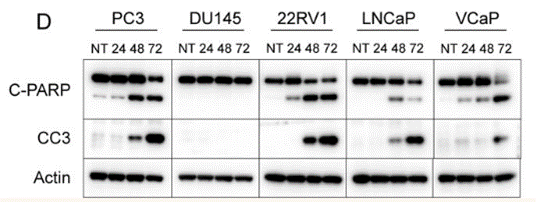
| Western blot | Cleaved PARP / CC3 ATF4 / ATF3 p-GCN2 / GCN2 / p-eIF2a / eIF2a p-p70S6K / p-S6 / p-4EBP1 / 4EBP1 / p-HSF1 / HSF1 |
|
29588331 |
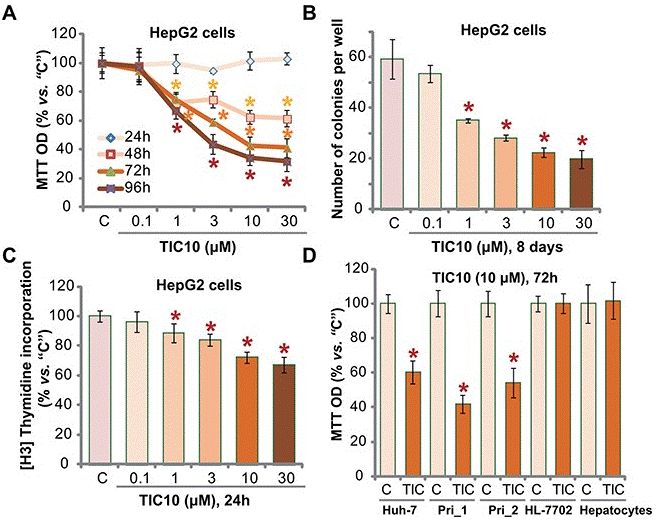
| Growth inhibition assay | Cell viability |
|
29588330 |
Informationen zu klinischen Studien (Clinical Trial Information)
(Daten von https://clinicaltrials.gov, aktualisiert am 2026-08-13)
| NCT-Nummer | Rekrutierung | Bedingungen | Sponsor/Kollaboratoren | Startdatum | Phases |
|---|---|---|---|---|---|
| NCT05476939 | RECRUITING | Diffuse Intrinsic Pontine Glioma; Diffuse Midline Glioma, H3 K27M-Mutant; Diffuse Midline Glioma, H3K27-altered |
Gustave Roussy, Cancer Campus, Grand Paris |
2022-09-29 | PHASE3 |
| NCT05580562 | RECRUITING | H3 K27M; Glioma |
Jazz Pharmaceuticals |
2023-01-23 | PHASE3 |
| NCT05542407 | RECRUITING | Endometrial Cancer; Metastasis; Endometrioid Endometrial Cancer; Carcinosarcoma; Serous Adenocarcinoma of Endometrium (Diagnosis); Clear Cell Endometrial Carcinoma; Endometrial Endometrioid Adenocarcinoma; Endometrial Mixed Cell Adenocarcinoma |
UNC Lineberger Comprehensive Cancer Center |
2023-10-23 | PHASE1 |
| NCT05009992 | RECRUITING | Diffuse Intrinsic Pontine Glioma; Diffuse Midline Glioma, H3 K27M-Mutant; Recurrent Diffuse Intrinsic Pontine Glioma; Recurrent Diffuse Midline Glioma, H3 K27M-Mutant; Recurrent WHO Grade III Glioma; WHO Grade III Glioma |
University of California, San Francisco |
2021-10-20 | PHASE2 |
| NCT04055649 | RECRUITING | Malignant Ovarian Epithelial Tumor; Platinum-Resistant Fallopian Tube Carcinoma; Platinum-Resistant Ovarian Carcinoma; Platinum-Resistant Primary Peritoneal Carcinoma; Recurrent Fallopian Tube Carcinoma; Recurrent Ovarian Carcinoma; Recurrent Primary Peritoneal Carcinoma; Refractory Fallopian Tube Carcinoma; Refractory Ovarian Carcinoma; Refractory Primary Peritoneal Carcinoma |
Ira Winer |
2020-01-21 | PHASE2 |
| NCT05630794 | RECRUITING | Colorectal Adenomatous Polyp; Colorectal Carcinoma; Familial Adenomatous Polyposis; Multiple Adenomatous Polyps |
National Cancer Institute (NCI) |
2025-10-06 | PHASE1 |

Die Produkte sind nur für Forschungszwecke bestimmt. Nicht zur Anwendung am Menschen. Kein Verkauf an Patienten.
©Copyright 2013 Selleck Chemicals. Alle Rechte vorbehalten.