
Nur für die Forschung bestimmt
Hygromycin B Antibiotikum
Kat.-Nr.: S2908
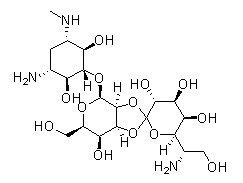
Chemische Struktur
Molekulargewicht: 527.52
Qualitätskontrolle (Quality Control)
- In Nature Medicine für seine erstklassige Qualität zitiert
- COA
- NMR
- Datenblatt
- SDS
- In Nature Medicine für seine erstklassige Qualität zitiert
- COA
- Datenblatt
- SDS
- In Nature Medicine für seine erstklassige Qualität zitiert
- COA
- NMR
- Datenblatt
- SDS
- In Nature Medicine für seine erstklassige Qualität zitiert
- COA
- NMR
- Datenblatt
- SDS
- In Nature Medicine für seine erstklassige Qualität zitiert
- COA
- NMR
- Datenblatt
- SDS
| Verwandte Targets | Integrase Bacterial Antibiotics Anti-infection Fungal Antiviral COVID-19 Parasite Reverse Transcriptase HIV |
|---|---|
| Andere Antineoplastic and Immunosuppressive Antibiotics Inhibitors | Staurosporine (STS) Cyclosporin A Oligomycin A (MCH 32) Puromycin Dihydrochloride Nigericin sodium salt Geldanamycin (NSC 122750) Honokiol Streptozotocin (STZ) Sodium Monensin (NSC 343257) Cephalomannine |
Chemische Informationen, Lagerung & Stabilität (Chemical Information, Storage & Stability)
| Molekulargewicht | 527.52 | Formel | C20H37N3O13 |
Lagerung (Ab Erhaltdatum) | |
|---|---|---|---|---|---|
| CAS-Nr. | 31282-04-9 | SDF herunterladen | Lagerung von Stammlösungen |
|
|
| Synonyme | Hygrovetine | Smiles | CNC1CC(C(C(C1O)OC2C3C(C(C(O2)CO)O)OC4(O3)C(C(C(C(O4)C(CO)N)O)O)O)O)N | ||
Löslichkeit (Solubility)
|
In vitro |
Water : 100 mg/mL
DMSO
: Insoluble
Ethanol : Insoluble |
Molaritätsrechner
|
In vivo |
|||||
In-vivo-Formulierungsrechner (Klare Lösung)
Schritt 1: Geben Sie unten die Informationen ein (Empfohlen: Ein zusätzliches Tier einplanen, um Verluste während des Experiments auszugleichen)
Schritt 2: Geben Sie die In-vivo-Formulierung ein (Dies ist nur der Rechner, nicht die Formulierung. Bitte kontaktieren Sie uns zuerst, wenn im Abschnitt Löslichkeit keine In-vivo-Formulierung angegeben ist.)
Berechnungsergebnisse:
Arbeitskonzentration: mg/ml;
Methode zur Herstellung der DMSO-Stammflüssigkeit: mg Wirkstoff voraufgelöst in μL DMSO ( Konzentration der Stammflüssigkeit mg/mL, Bitte kontaktieren Sie uns zuerst, wenn die Konzentration die DMSO-Löslichkeit der jeweiligen Wirkstoffcharge überschreitet. )
Methode zur Herstellung der In-vivo-Formulierung: Nehmen Sie μL DMSO Stammflüssigkeit, fügen Sie als Nächstes hinzuμL PEG300, mischen und aufklären, fügen Sie als Nächstes hinzuμL Tween 80, mischen und aufklären, fügen Sie als Nächstes hinzu μL ddH2O, mischen und aufklären.
Methode zur Herstellung der In-vivo-Formulierung: Nehmen Sie μL DMSO Stammflüssigkeit, fügen Sie als Nächstes hinzu μL Maisöl, mischen und aufklären.
Hinweis: 1. Bitte stellen Sie sicher, dass die Flüssigkeit klar ist, bevor Sie das nächste Lösungsmittel hinzufügen.
2. Achten Sie darauf, die Lösungsmittel in der richtigen Reihenfolge hinzuzufügen. Sie müssen sicherstellen, dass die im vorherigen Schritt erhaltene Lösung klar ist, bevor Sie das nächste Lösungsmittel hinzufügen. Physikalische Methoden wie Vortexen, Ultraschall oder ein warmes Wasserbad können zur Unterstützung des Lösungsvorgangs verwendet werden.
Wirkungsmechanismus (Mechanism of Action)
| In vitro |
Hygromycin B has a single binding site within the 30S, it locates in the major groove of the helix very close to the helical axis, and makes contact with nucleotides from both RNA strands in the region 1490-1500 and 1400–1410. Ring I of HygB is involved in nonsequence-specific interactions with the backbone phosphate oxygen atoms of G1494 in addition to base-specific interactions with G1494 and U1495. Rings II and III make weak base-specific hydrogen bonds to both C1404 and U1498, but their main role apparently is to position ring IV for interaction with bases in the 1496–1498 region. Ring IV of HygB comes within 4A of the second base of the P site bound mRNA codon. This compound (0.38 mM) completely halts yeast cell growth in rich media. It strongly block Polypeptide synthesis in cell-free extracts from rabbit reticulocytes, wheat germ and yeast. It inhibits peptide chain elongation by yeast polysomes by preventing elongation factor EF-2-dependent translocation. This antibiotic inhibits (80%) the elogation-factor-(EF)G-plus-GTP-dependent reaction of either AcPhe-tRNA or natural peptideyl-tRNA with puromycin in Escherichia coli cell-free systems. It blocks the nascnet peptide chains of either purified endogenous E. coli polysomes or poly(uridylic acid)-programmed ribosomes during polypeptide synthesis. It inhibits the non-enzymic translocation and the release of AcPhe-tRNA from the ribosomal acceptor site promoted by depletion of NH4 ions. It is used for resistance selection in mouse L cells transfected with Escherichia coli genes coding for resistance to the aminocyclitol antibiotics hygromycin B. This chemical is used as a selectable marker for T-DNA transfer and integration in the ectomycorrhizal fungus Suillus bovinus. |
Referenzen |
|
|---|

Die Produkte sind nur für Forschungszwecke bestimmt. Nicht zur Anwendung am Menschen. Kein Verkauf an Patienten.
©Copyright 2013 Selleck Chemicals. Alle Rechte vorbehalten.